Beginner Reading Books, Sorted by Your Kid's Stage

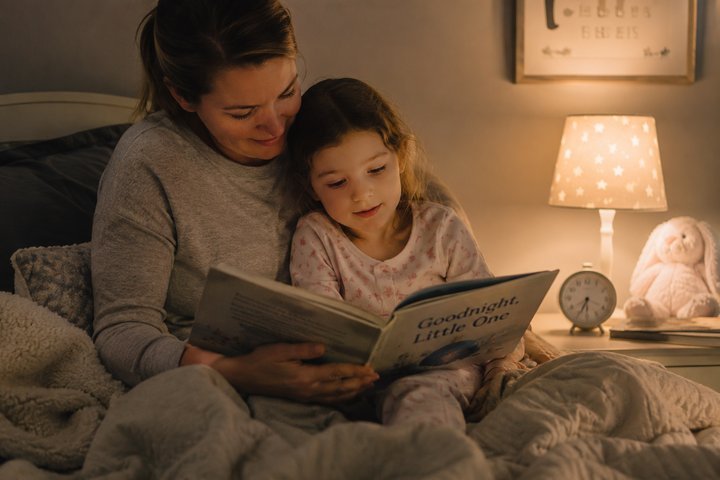
You’re halfway through a bedtime book when one word stops everything.
Your child stares at it. Tries once. Tries again. You help. The next sentence has two more hard words, and suddenly nobody cares what happens to the dog in the story because reading has become a negotiation.
That doesn’t mean your kid is behind.
It means the book was wrong for tonight.
The easiest way to choose beginner reading books isn’t by the age printed on a website or the level stamped on the cover. Start with what your child can actually do.
Find their stage below. Then give them books that let them succeed.
Where is your kid right now?
Most kids hit these stages somewhere between roughly 4 and 7, but that window is wide on purpose. A reading stage tells you more than a birthday does.
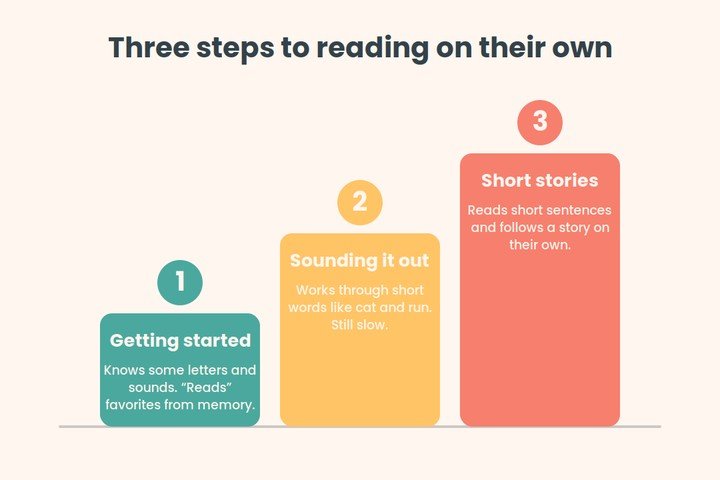
Stage 1: Getting ready or just starting
Your kid is here if: They know some letters and sounds, recognize a few familiar words, or “read” favorite books mostly from memory.
They need very simple readers and decodable books, which are books built around words they can sound out using letter sounds they already know.
And yes, the kid who recites an entire favorite book perfectly while holding it upside down hasn’t secretly become a fluent reader overnight.
They’re remembering the language.
That’s still useful. They’re learning how books sound, how stories work, and that words on pages mean something.
Stage 2: Sounding it out
Your kid is here if: They can work through short words such as cat, run, and fish, but reading is still slow and they need help.
They need short early readers with manageable sentences, repeated words, plenty of pictures, and an actual reason to turn the page.
Stage 3: Reading short stories
Your kid is here if: They read short sentences independently and are starting to follow a story without you carrying every other line.
They need bridge books: longer stories and short chapters, but still with big type, illustrations, and breathing room.
It’s completely normal to sit between two stages. Pick from both.
Which beginner reading books work best for Stage 1?
At this stage, success matters more than literary greatness.
The books are simple on purpose. Adults sometimes look at a decodable reader and think, “Well, this plot isn’t exactly Charlotte’s Web.”
Correct.
The kid just read Sam sat. Let Sam sit in peace.
BOB Books Set 1: Beginning Readers by Bobby Lynn Maslen
Best for: A child starting to connect letter sounds into short words.
Why it works: The early BOB Books use short-vowel patterns and very simple words, then build gradually. They’re designed for children taking their first steps into independent reading.
Anita note: This is the one I’d start with when a child knows letter sounds but freezes when asked to read a whole book. The pages look almost ridiculously simple. That’s exactly why the first success comes quickly.
My First Little Readers: Level A by Deborah Schecter
Best for: A child who knows a few words and needs tiny, predictable books.
Why it works: These books use very simple patterned text and strong picture support. Each book is short enough for a beginning reader to reach the end without running out of steam.
They’re good for a child who needs to experience, “I read the whole thing,” without the whole thing taking twenty minutes.
Big Shark, Little Shark by Anna Membrino
Best for: A child ready for short sentences and repeated language.
Why it works: The words are simple, the contrast between the two sharks makes the story easy to follow, and the pictures carry enough meaning to keep a new reader oriented.
Biscuit by Alyssa Satin Capucilli
Best for: A child moving from patterned text into a real little story.
Why it works: Short sentences, repetition, familiar routines, and a puppy give a beginning reader plenty of support without making the book feel like an exercise sheet.
Ty’s Travels: All Aboard! by Kelly Starling Lyons
Best for: A child who benefits from rhythm, repetition, and strong picture clues.
Why it works: The text is simple and rhythmic, and Ty’s pretend-play story gives the child something to follow beyond just decoding words.
Pete the Cat: Pete at the Beach by James Dean and Kimberly Dean
Best for: A child who already knows Pete and needs an easy shared reader.
Why it works: Familiar characters lower the work before you even start. The text stays simple and the pictures do plenty of supporting.
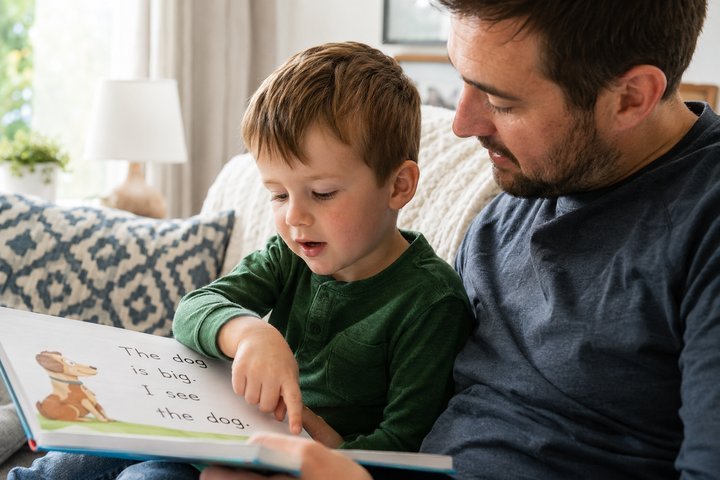
Which books work best for Stage 2 readers who are sounding words out?
This is the stage where the right book needs to do two jobs.
It has to be readable.
It also has to be interesting enough that your child is willing to sound out another sentence.
Funny helps enormously here.
Frog and Toad Are Friends by Arnold Lobel
Best for: A child reading short sentences with occasional help.
Why it works: The language is clear, the stories are short, and Frog and Toad are funny without the book needing frantic action.
Anita note: This is one of the best books for the child who’s technically capable of reading but keeps announcing that reading is boring. Frog and Toad have actual personalities. That matters.
Little Bear by Else Holmelund Minarik
Best for: A reader ready for a little more text but still relying on pictures.
Why it works: The sentences are gentle and straightforward, the illustrations support the story, and each section feels manageable.
We Are in a Book! by Mo Willems
Best for: A reader who loves dialogue and needs reading to feel funny.
Why it works: Elephant and Piggie speak in big, clear speech bubbles. The vocabulary repeats, the illustrations show exactly who’s talking, and the joke depends on the child realizing that the characters know somebody is reading them.
A Friend for Dragon: An Acorn Book (Dragon #1) by Dav Pilkey
Best for: A reader ready for short stories with a little more text.
Why it works: Scholastic’s Acorn books are built for children learning to read, with accessible text, short story sections, humor, and full-color illustrations. A Friend for Dragon is the first book in Dav Pilkey’s Dragon series in the Acorn line.
Hello, Crabby! by Jonathan Fenske
Best for: A reluctant reader who likes comic-style books.
Why it works: Speech bubbles, short exchanges, strong expressions, and silly jokes make the page feel lighter than a traditional reader.
Danny and the Dinosaur by Syd Hoff
Best for: A child who wants a real adventure but isn’t ready for chapter books.
Why it works: The sentences stay accessible and the pictures carry the action. It feels like a proper story without asking a new reader to fight through a wall of text.
Which beginner reading books work for Stage 3?
This is the bridge stage.
Your child can read. A full chapter book still looks like someone replaced all the illustrations with a wall of tiny print.
Bridge books solve that problem.
Eva’s Treetop Festival by Rebecca Elliott
Best for: A new independent reader ready for short chapters.
Why it works: Owl Diaries uses diary entries, full-color art, accessible text, and illustrations throughout. It looks like a chapter book while still giving a new reader plenty of support.
Anita note: This is a good first “I read a chapter book” book. It looks substantial in your child’s hands without punishing them with three pages of uninterrupted text.
Mercy Watson to the Rescue by Kate DiCamillo
Best for: A reader who can handle longer sentences but still wants lots of pictures.
Why it works: The chapters are short, the type is friendly, Chris Van Dusen’s illustrations carry the comedy, and Mercy is a pig whose priorities revolve heavily around buttered toast.
That is enough plot motivation for quite a lot of children.
Hi! Fly Guy by Tedd Arnold
Best for: A child who wants short chapters and maximum silliness.
Why it works: The text is manageable, the illustrations are everywhere, and the humor keeps the reading moving.
Rise of the Earth Dragon by Tracey West
Best for: A reader ready for a longer story with plenty of illustration support.
Why it works: This is the first Dragon Masters book in Scholastic’s Branches line. It has short chapters, illustrations, magic, and an ongoing series waiting if the first one lands.
Dinosaurs Before Dark by Mary Pope Osborne
Best for: A confident Stage 3 reader ready for the next step up.
Why it works: Short chapters, a fast-moving mystery, and a clear goal keep children going through more text than the books above.
Good to know: This is a jump. If your child spends every page asking for help, put it away for a month and try again later. There is no prize for suffering through Book 1 early.
A book one level too hard can turn a perfectly willing reader into a child crying over the word through at bedtime.
Make tonight easier.
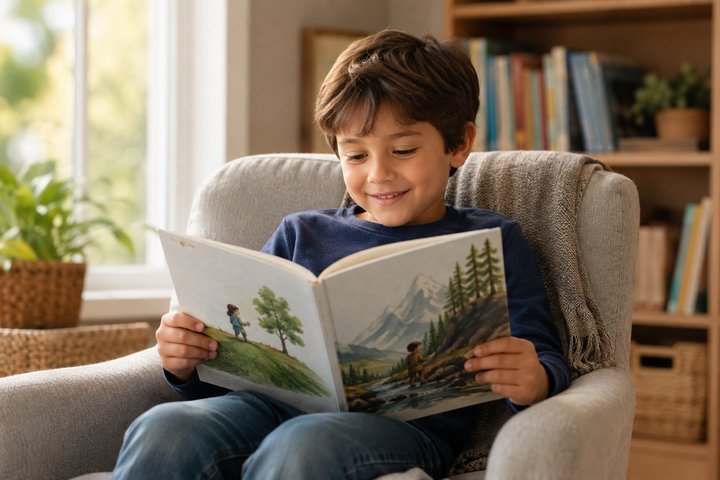
How do kids actually learn to read?
The mainstream starting point is phonics, which means connecting printed letters with their sounds and learning how to blend those sounds into words.
Widely used reading guidance includes explicit work with letter-sound relationships and decoding, especially in the early years.
That doesn’t mean every word gets painfully sounded out forever.
With practice, children start recognizing more words automatically. Some common sight words get memorized along the way too. Reading isn’t an either-or contest between the two.
And keep reading to your child.
Learning to read independently isn’t a graduation from bedtime stories. Read-alouds let them hear richer vocabulary and enjoy books far beyond what they can decode themselves. If you also use screens for learning, our guide to educational content for young kids is a good next stop.
The most useful goal is still simple: keep books enjoyable.
A child who spends every reading session bracing for corrections isn’t getting extra points for persistence.
Their teacher or a children’s librarian knows that specific child’s reading level better than any online list. If you’re stuck between stages, ask them.
How do you pick the right reading level so tonight goes well?
Use the five-finger rule.
Have your child read a page. Each time they hit a word they don’t know, put up one finger.
If you reach five fingers, that book is probably too hard for independent reading tonight.
Pick something easier, or turn it into a book you read together.
Then remember three things.
Let them reread books. The fifth reading is not wasted. Re-reading helps words come faster and makes reading smoother.
Take turns when a book is a stretch. You read a page. They read a page. Nobody said every book had to become a solo performance.
Stop before the meltdown. If reading has turned into twenty minutes of corrections, you’re done for tonight.
A six-minute win beats a thirty-minute battle.
FAQ
What are the best books for a child just learning to read?
Start with decodable books such as BOB Books and very simple early readers such as First Little Readers, Biscuit, or Big Shark, Little Shark.
The right Stage 1 book uses words your child has a real chance of sounding out and keeps the amount of text small.
What age do kids start reading?
There isn’t one birthday when a child is supposed to suddenly become a reader.
Many children start building independent reading skills somewhere across the preschool and early elementary years. Roughly 4 to 7 is a useful broad window, not a deadline.
Match the book to the child, not the birthday.
What is a decodable book?
A decodable book is written so a beginning reader can sound out most of the words using letter-sound patterns they’ve already learned.
That gives a new reader a real chance to work out the word instead of guessing from the picture.
Should I use phonics to teach my child to read?
Phonics, connecting letters with sounds and blending those sounds into words, is a widely used and well-supported foundation for early reading instruction.
You don’t need to build a home curriculum around it. Read together, practice the sounds your child is learning, and let their teacher guide the specifics.
The bottom line
Your kid doesn’t need the hardest book they can survive.
They need the book that lets them feel like a reader tonight.
Pick the stage that fits now, let them reread favorites, and move up when the current books start feeling easy. For another low-pressure learning option, see our guide to educational content for young kids. And if you’re keeping track of those little reading wins, the Bimokids reading log will be along soon.