Best Educational YouTube Channels for Toddlers (Honest)
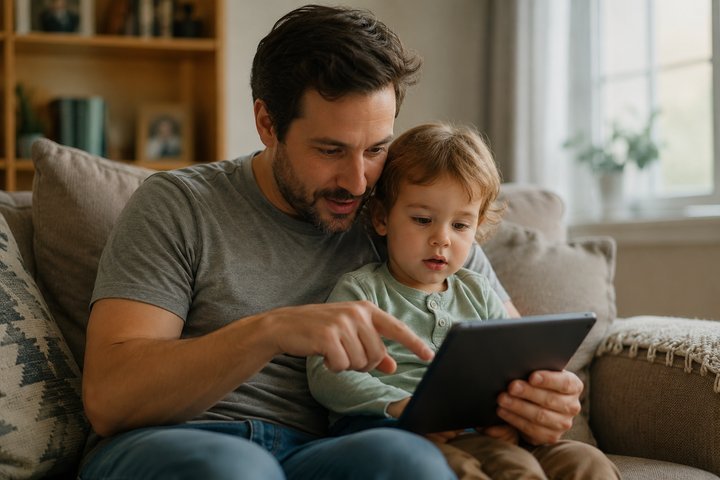
YouTube is free, endless, and already sitting on almost every screen you own.
That is both its best feature and the problem.
You can put on a lovely counting song while you make lunch, glance back a few minutes later, and wonder how your child arrived at a screaming cartoon involving a dump truck, six dancing bananas, and music apparently mixed for a nightclub.
So this isn’t a list of the biggest kids’ channels. You can get that anywhere.
These are the educational YouTube channels I’d actually choose for a young child, plus the part most lists skip: how to stop YouTube itself from wrecking a good choice.
First, the part nobody tells you: the channel isn’t the whole problem
A good YouTube channel does not make the rest of YouTube good.
That matters more than any ranking on this page.
Regular YouTube is built around recommendations, autoplay, advertising, and getting you to watch the next thing. The AAP’s 2026 digital-media policy specifically calls out autoplay, algorithmic feeds, ads, and other engagement-driven design features as things that can keep children on screens longer or steer them toward lower-quality content.
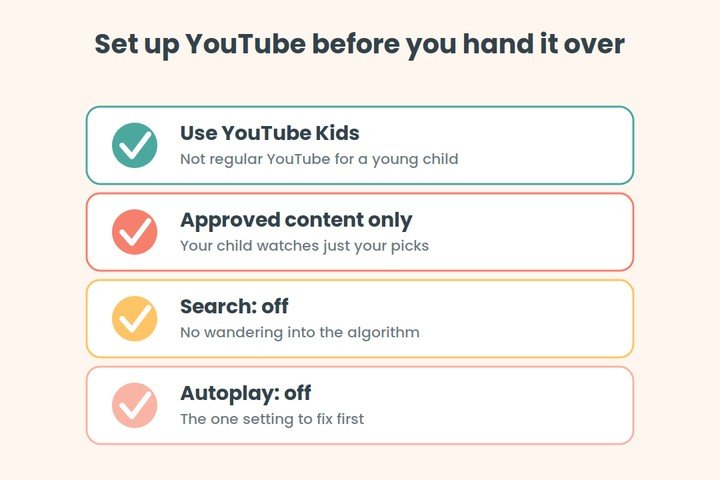
So before you pick a single channel, fix the platform.
Use YouTube Kids for a young child. It gives parents age-based settings, blocking, search controls, watch-history controls, and an Approved content only option where your child can watch only the videos and channels you’ve chosen.
Turn autoplay off. If you do one thing after reading this page, make it this. Google lets parents disable autoplay so a child cannot simply turn it back on.
Pick the video yourself. Don’t type “ABC songs” into search, hand over the tablet, and hope YouTube develops judgment while you’re gone. Choose the actual video or playlist first.
For very young kids, I like YouTube Kids’ Approved content only setting even better. Your child cannot search, and recommendations stay inside what you’ve approved.
Know that YouTube Kids isn’t a sealed vault. Google itself says its filters aren’t perfect and that not every available video is manually reviewed. That’s a strong argument for choosing channels yourself rather than treating the Kids logo like a babysitting license.
Expect ads unless you’re using an ad-free option. YouTube Kids still permits limited paid ads. YouTube Premium removes paid ads in YouTube Kids, but even without Premium, staying close enough to skip or explain an ad helps.
I learned the autoplay lesson the irritating way. Put on one quiet animal song. Walk ten feet away to deal with laundry. Come back to a completely different channel shouting colors over plastic toys.
The first video wasn’t the mistake.
Leaving YouTube in charge of video number two was.
What does current guidance say about YouTube and young kids?
The AAP updated its digital-media policy in 2026, and the current advice is more useful than a single stopwatch number.
For infants, the AAP recommends limiting screen use, watching together when media is used, and making sure screens don’t replace talking, reading, singing, play, movement, and exploration. Infants under about 18 months have a much harder time transferring what they see on a screen into real-world learning.
The AAP’s infant 5 Cs guidance still says cartoons and nursery-rhyme videos aren’t recommended for babies, while noting that brief, high-quality media such as PBS KIDS or Sesame Street is the better direction if a caregiver does put something on.
For toddlers and preschoolers, the newer guidance puts the emphasis on quality, co-viewing, boundaries, and what screens are crowding out rather than treating one exact number as the whole answer. The AAP’s five questions are Child, Content, Calm, Crowding Out, and Communication.
Your pediatrician is the person to ask if you’re worried about your own child’s screen use, sleep, language, behavior, or development.
How can you tell a good kids’ channel from flashy nonsense?
I ignore the word educational on the thumbnail.
Anyone can put ABCs next to a cartoon dinosaur and call the result learning.
Instead, watch what the video actually does.
A good channel gives your child one idea at a time. The voice is clear. The music doesn’t fight with the words. Scenes stay on screen long enough to notice something. There are pauses where you can answer a question, copy an action, or say, “That’s a triangle.”
The AAP’s current guidance points parents toward child-centered content with real learning goals and away from distracting, heavily commercial, fast-paced experiences. It specifically names PBS KIDS and Sesame Workshop as examples of stronger child-centered media.
Then use the test I trust most:
What is your child like when the video turns off?
If they look up and move on, good.
If every ending turns into a negotiation worthy of international diplomacy, pay attention.
The content might be too intense. The session might be too long. Autoplay might have trained them to expect “one more.”
You don’t need a research paper to notice what your own kid looks like after twenty minutes.
Which educational YouTube channels are actually worth watching?
These aren’t all equally calm, and I wouldn’t use every video from every channel.
That’s another important difference between a real recommendation and dumping ten channel names into a list. Choose the video, not just the logo.
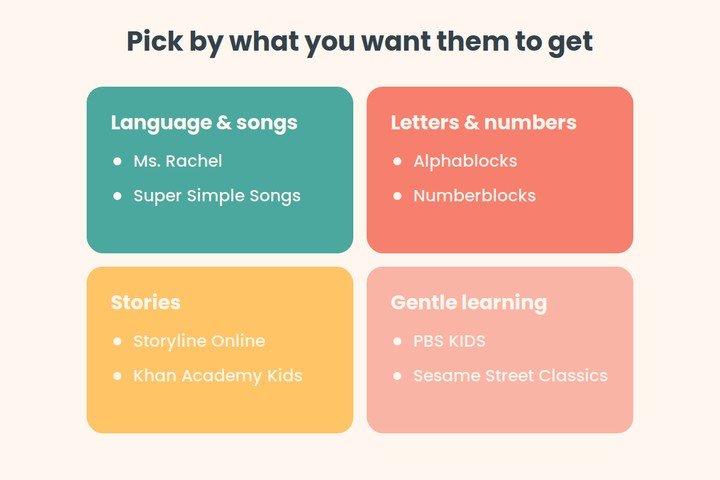
Ms. Rachel
Best for: 18 months–3 years, early language, songs, gestures, first words
Why it’s worth it: Ms. Rachel speaks directly to young children, repeats words, pauses for responses, uses gestures and songs, and leaves actual space for a child to participate.
The AAP looked at Ms. Rachel specifically in a June 2026 guidance update. It notes that there is no published research proving Ms. Rachel videos themselves improve development, but says her videos include several features associated with better learning from media: clear learning goals, limited distracting “bells and whistles,” pauses for children to respond, and parent involvement.
That’s the claim worth making. Not “Ms. Rachel will teach your child to talk.”
Good to know: Some compilations are very long. I would choose a section or one short viewing period rather than treating a 60-minute upload as the recommended dose. And for children under 2, the AAP still puts a lot of weight on you joining in.
Super Simple Songs
Best for: 2–4 years, songs, routines, vocabulary, movement
Why it’s worth it: The name is accurate. The songs repeat. Lyrics stay understandable. Most videos give a child time to follow the words and movements instead of changing the screen every beat.
The official Super Simple Songs channel remains active, with current uploads alongside its large library of nursery rhymes and original children’s songs.
This is a much easier channel to sing along with than a compilation built around constant visual surprises.
Good to know: Not every Super Simple video is equally quiet. Some dance and compilation videos are much livelier. I pick individual songs rather than starting an hour-long mix.
Caitie’s Classroom
Best for: 2–5 years, songs, pretend play, simple science and everyday experiences
Why it’s worth it: Caitie is an actual person talking directly to the child, which gives you plenty of room for imitation and conversation. The pre-recorded episodes mix singing with crafts, animals, movement, field trips, and simple explanations.
Caitie’s Classroom is part of Super Simple. Its library includes classroom episodes, songs, crafts, pretend play, and simple activities for preschoolers.
It also gives you easy follow-through after the screen goes off. Watch a bug episode, then go outside and turn over a rock. That’s the kind of screen-to-real-life bridge I want from “educational” media.
Good to know: Caitie’s Classroom stopped its live broadcasts in 2019. The content available now is pre-recorded, including the existing episode library and related Super Simple material. Some full episodes run longer than I’d use in one sitting with a young toddler, so I’d pick a segment rather than automatically playing the whole thing.
PBS KIDS
Best for: 2–5 years, language, social-emotional learning, early science and problem-solving
Why it’s worth it: PBS KIDS is my easiest broad recommendation because the content is built around actual child-development and learning goals rather than whatever earns the next click.
The AAP’s 2026 policy specifically recommends PBS KIDS as an example of high-quality, child-centered media and says nonprofit children’s media such as PBS KIDS has a particularly strong evidence base. PBS maintains an official YouTube channel as well.
For YouTube, I would search inside the official PBS KIDS channel for the show or skill you want rather than wandering through YouTube recommendations.
Good to know: PBS KIDS includes lots of different shows. A Daniel Tiger clip and a fast game compilation don’t create the same viewing experience. Pick deliberately.
Alphablocks
Best for: 3–5 years, letter sounds, phonics and early reading
Why it’s worth it: Alphablocks gives letters a job. The characters make their sounds and combine to build words, so the phonics idea is baked into the story instead of pasted onto random animation.
The official Alphablocks YouTube channel continues publishing phonics and early-reading material.
For a three- or four-year-old who has started noticing letters, it gives you plenty to repeat together.
“What sound did B make?”
“Can you find a B in your book?”
Now the screen has somewhere useful to go.
Good to know: This is more energetic than Storyline Online or a quiet PBS clip. I wouldn’t call every Alphablocks video low-stimulation. I would call the better ones focused and purposeful.
Numberblocks
Best for: 3–5 years, counting, number sense and early math
Why it’s worth it: Numberblocks makes quantities visible. When three becomes four, something concrete changes on screen. That makes the math easier to talk about with a preschooler.
The official Numberblocks channel continues to publish counting and early-math content.
This is the sort of “educational” channel where you can see what is actually being taught without reading the thumbnail’s promises.
Good to know: Like Alphablocks, it gets bouncy. Choose regular episodes over giant compilations if your goal is calmer viewing.
Storyline Online
Best for: 3–6 years, stories, listening and early literacy
Why it’s worth it: This one is almost aggressively simple by YouTube standards.
An actor reads a real children’s book. Illustrations appear. The story gets to be the interesting part.
Storyline Online is the SAG-AFTRA Foundation’s children’s literacy program and offers a large collection of professionally produced read-alouds through its site and official YouTube channel.
I especially like this for a child who wants “a video” when what you really want is story time without neon objects ricocheting across the screen.
Good to know: Some books are better for preschoolers than younger toddlers. Preview the story first, especially if your child is sensitive to scary characters or conflict.
Khan Academy Kids
Best for: 3–6 years, stories, letters, early math and school-readiness skills
Why it’s worth it: The Khan Academy Kids YouTube channel includes read-alouds and short early-learning lessons connected to its preschool-through-second-grade educational program.
The Story Time videos are my favorite YouTube part for younger kids. They have a clear beginning and end, and they don’t feel engineered to make the next thumbnail irresistible.
Good to know: Some lessons are aimed at older preschool and early elementary children. A two-year-old doesn’t need a reading-comprehension lecture because the thumbnail has a cartoon bear on it.
Sesame Street Classics
Best for: 2½–5 years, language, social skills, songs and everyday learning
Why it’s worth it: If newer children’s media feels too frantic, go backward.
In 2026, more than 100 classic Sesame Street episodes were added to YouTube, alongside the official Sesame Street channel and PBS KIDS availability.
Older segments leave noticeably more room for a conversation to happen. Someone talks. A child answers. A puppet thinks about something. Nobody seems terrified that you will leave if the screen remains visually unchanged for four seconds.
The AAP also specifically names Sesame Workshop as an example of child-centered media with a strong evidence base.
Good to know: Sesame Street spans decades, formats and pacing styles. I specifically mean the calmer clips and classics here, not every brightly edited Elmo compilation that happens to carry the logo.
If you only pick one
For a younger toddler working on language, I’d pick Ms. Rachel, with you sitting nearby and joining in.
For a preschooler, I’d pick PBS KIDS because the quality stays stronger across a much wider range of subjects.
And regardless of channel, I’d still turn autoplay off.
That setting is doing more parenting work than the subscriber count ever will.
Which popular kids’ channels did I leave off?
The obvious one is CoComelon.
It does contain songs, numbers, routines, and learning concepts. I’m not going to tell you it is poison in cartoon form because the evidence doesn’t support that.
The AAP’s own discussion of CoComelon says there isn’t research showing that the program itself has a positive or negative effect on toddler development. It also notes criticism of the show’s fast pacing and shallower educational value compared with stronger options such as Ms. Rachel or Daniel Tiger’s Neighborhood.
That’s enough for me.
If I’m specifically building a list around calm, useful, easy-to-co-view content, CoComelon doesn’t beat the choices above.
The same goes for a lot of giant nursery-rhyme channels where “educational” means somebody sings the alphabet while the camera cuts constantly between shiny objects.
I once clicked an “educational colors” video that technically did teach colors.
It also had enough movement, sound effects, bouncing text, vehicle noises, and scene changes to make the color red seem like a minor subplot.
That’s not what I’m looking for.
And watch your own kid. One of the AAP’s five Cs is literally Child. Children respond differently to the same media.
If a particular channel reliably leaves your child frantic when it ends, you have useful data.
You don’t need the internet to overrule what is happening in your living room.
FAQ
Is YouTube OK for toddlers?
YouTube can be used thoughtfully with toddlers, but the platform needs guardrails.
Current AAP guidance emphasizes high-quality content, watching together, reasonable boundaries, and protecting sleep, play, movement, reading, and family interaction. For infants and very young toddlers, real-world interaction remains much more important for learning.
For a young child on YouTube, use YouTube Kids, turn off autoplay, choose videos yourself, and consider Approved content only so recommendations stay inside your own list.
What is the best educational YouTube channel for toddlers?
For language-focused toddlers, Ms. Rachel is one of the strongest choices because she uses repetition, pauses, gestures, clear learning goals, and direct interaction. The AAP specifically notes those strengths while also pointing out that there is no published research proving Ms. Rachel videos themselves improve development.
Super Simple Songs is strong for songs and vocabulary, while PBS KIDS is my broadest pick for high-quality preschool learning.
Whichever you choose, turn autoplay off.
Is YouTube Kids safer than regular YouTube?
Yes, it gives parents meaningfully better controls, but it is not perfect.
YouTube Kids lets parents choose age settings, disable search and autoplay, block videos and channels, pause recommendation history, or use Approved content only so children can access only hand-picked material.
Google also states plainly that automated filtering is imperfect and children can still encounter content a parent doesn’t want them to see.
For toddlers, I would still choose the videos myself.
Is CoComelon educational?
CoComelon contains songs and early-learning concepts, but I don’t put it on a calm educational YouTube list.
The AAP says there isn’t research showing CoComelon itself has a positive or negative developmental effect. Its guidance does note concerns from child-development experts about fast pacing and weaker educational value compared with stronger choices.
So I don’t treat “CoComelon is harmful” as a fact.
I simply think there are better choices when your goal is slower, easier-to-co-view learning.
The bottom line
Finding a good channel helps.
Locking down YouTube is what keeps it good.
Choose the video. Turn autoplay off. Watch together when you can. Then let the screen end.
For more calm TV choices, see our low-stimulation shows for toddlers. If your child is under 2, read our honest guide to screens and babies. And for days when you’d rather skip YouTube entirely, start with these screen-free baby activities.
For more easy play ideas to keep in your back pocket, grab the Bimokids play pack.