
Activities for 2 Year Olds - What Actually Works

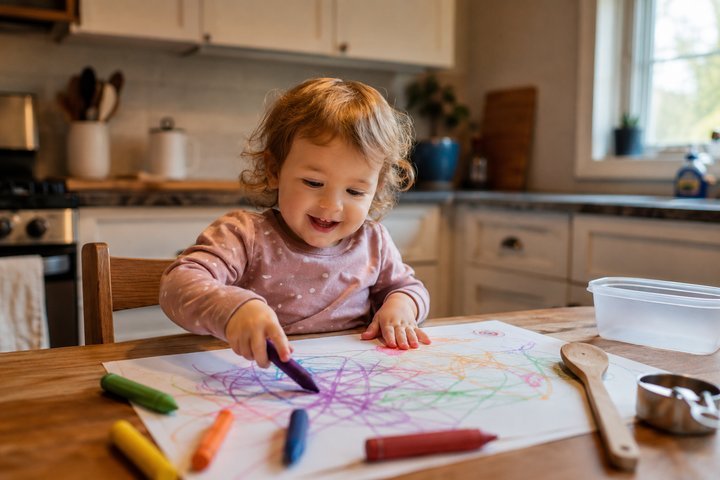
You set up a nice activity. Your 2-year-old says no. You convince them to try it. Two minutes later they’re furious because the lid won’t go on the way they want.
You didn’t set it up wrong. Your kid isn’t bad. This is age 2.
The activities that work best now give them something they’re desperate for: control. Add a real job or somewhere to put all that physical energy and you’ve got a much better chance.
Here are 25 screen-free activities for 2 year olds using stuff you already have.
Why is age 2 so hard for activities?
Two-year-olds want to do everything themselves. The problem is that their hands, words, and patience haven’t caught up with that plan yet.
So the puzzle piece won’t fit. The paint goes somewhere unexpected. You help when they didn’t ask. Suddenly the activity is over and everybody is having a terrible time.
This is why I skip activities with one perfect finished result at 2.
Give them choices. Let them decide what goes where. Give them jobs where “helping” doesn’t have to look right. Pick activities that still work when your child changes the rules halfway through.
A better craft isn’t the answer. More room to be in charge is.
What’s a 2-year-old actually into right now?
Two-year-olds copy everything. They want your spoon, your bag, your cleaning cloth, and whatever job you were hoping to finish quickly.
Pretend play takes off at this age. So does the need to say, “Me do it.”
They’re also drawn to anything with a big result. Pour the water. Squash the dough. Throw something. Make a mark. Carry the heavy basket.
I’ve watched a 2-year-old ignore a carefully prepared activity and spend twelve minutes moving the empty bowls from one chair to another. That’s age 2 in one scene. The job they invent is frequently better than yours.
If anything about your child’s development ever worries you, your pediatrician is the person to ask, not a blog.
Activities that give a 2-year-old control
These are the activities I reach for when “no” has become the word of the day. There is no finished product to protect and no single right way for your child to do them.
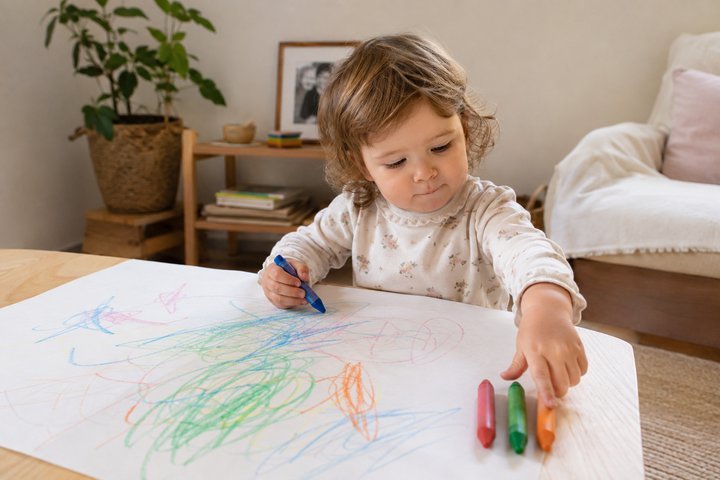
1. Three-crayon giant drawing
Tags: Busy solo · 5 min · Rainy day
You’ll need: A large sheet of paper and three washable crayons
What to do: Put the paper down and offer three crayons. Your child chooses what to use and what to draw. Don’t add instructions like “make a face” or “color the flower.” Three crayons is enough. Twenty-four crayons turns choosing into the activity.
What it’s building: Hand control, early drawing skills, and making independent choices.
2. Tear-it-up paper tray
Tags: Busy solo · 5 min · No prep · Rainy day
You’ll need: Scrap paper, old mail without personal information, and a bowl or tray
What to do: Show your child how to rip one piece of paper. Let them tear, crumple, pile, and move the scraps however they want. If they spend the whole time making tiny paper balls, leave it alone.
What it’s building: Hand strength and learning to use both hands together.
3. Playdough, no assignment
Tags: Busy solo · 5 min · Rainy day
You’ll need: Playdough and a tray
What to do: Put one lump of playdough on the tray. That’s the setup. Let your child squash it, pull it apart, roll it, hide bits inside the bigger lump, or poke it with their fingers. Skip the “let’s make a snowman” part unless they ask.
What it’s building: Finger strength and open-ended problem-solving.
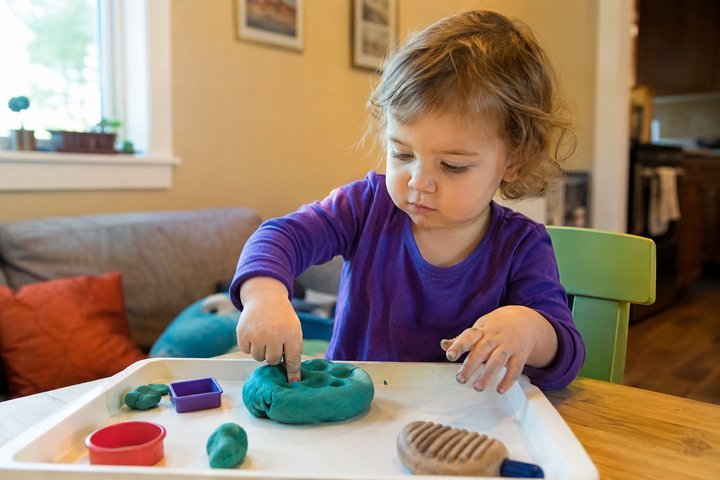
4. Dress-yourself basket
Tags: Busy solo · No prep · Rainy day
You’ll need: A basket with a few hats, oven mitts, an oversized T-shirt, and other safe clothes without long cords or straps
What to do: Put the basket on the floor and leave it there. Your child gets to decide what goes on, what comes off, and whether an oven mitt belongs on a foot. It will at some point.
What it’s building: Pretend play, body awareness, and dressing practice without turning it into a lesson.
5. Make-your-own piles
Tags: Busy solo · 5 min · No prep · Rainy day
You’ll need: Six to eight large safe objects such as chunky blocks, washcloths, toy animals, and wooden spoons
What to do: Put everything together on the floor. Start one pile, then stop. Your child might sort by type. They might put every object under the table. Don’t correct the system.
What it’s building: Comparing objects, making decisions, and working out their own patterns.
6. Sponge paint
Tags: 5 min · Rainy day
You’ll need: Washable paint, scrap cardboard or large paper, and a clean kitchen sponge
What to do: Put a small amount of paint on a plate and give your child the sponge. They can dab, drag, smear, stamp, or cover the whole page in one color. Don’t show them what the picture is supposed to become.
What it’s building: Hand control and experimenting with cause and effect.
7. Pour it your way
Tags: 5 min
You’ll need: A shallow tray, two plastic cups, one small pitcher, and a little water
What to do: Put everything on the tray and pour once. Then hand over the pitcher. Expect water on the tray. Expect water off the tray. Stay right there because this is water play.
What it’s building: Two-handed coordination and controlling how much water comes out.
8. Build-your-own snack plate
Tags: 5 min · No prep
You’ll need: Two or three familiar, age-appropriate snack foods and a plate
What to do: At snack time, put small portions of the foods where your child can choose them. Let them decide which goes on the plate first and where each one sits. You are not making lunch into a sorting lesson. You’re giving them one harmless thing to control.
What it’s building: Making choices and practicing everyday independence.
If you only try one: Do the three-crayon giant drawing. It gives a 2-year-old control without giving them forty-seven decisions, there is nothing to get wrong, and you can get something done beside them.
Activities that give them a real job
Two-year-olds don’t just want to watch you do things. They want in. A real cloth, real groceries, or a real stack of napkins beats a toy version surprisingly often.
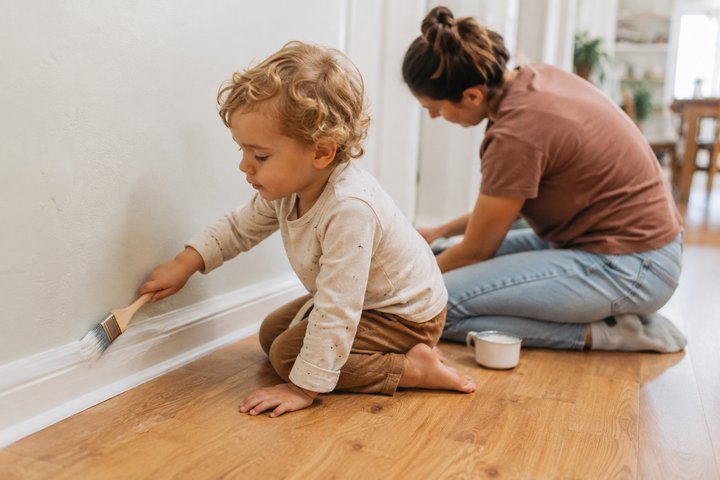
9. Baseboard paintbrush
Tags: Busy solo · No prep · Rainy day
You’ll need: A clean, dry paintbrush
What to do: Hand over the brush and show your child one dusty baseboard or chair leg. Tell them it’s their cleaning job. They will clean things that are not dirty. That’s fine. Expect the baseboards to remain imperfect.
What it’s building: Focus, arm control, and taking ownership of a real task.
10. Napkin delivery
Tags: Busy solo · 5 min · No prep
You’ll need: Napkins and places at the table
What to do: Give your child a small stack of napkins and ask them to put one at each place. Let them decide exactly where each napkin goes. Do not straighten them afterward while they’re watching. Two-year-olds notice these crimes.
What it’s building: Following a simple job and understanding one-to-one matching.
11. Water the plants
Tags: 5 min · No prep
You’ll need: A small cup with a little water and one or two plants
What to do: Give your child a small amount of water at a time. Point to the soil and let them pour. Refill only after the first cup is empty. A full pitcher turns this into an indoor flood remarkably fast.
What it’s building: Pouring control and caring for something in the house.
12. Grocery unpacker
Tags: Busy solo · No prep
You’ll need: A grocery bag with safe, light, sealed items
What to do: Put a few safe groceries on the floor and give your child a low shelf or basket to fill. Pasta boxes, paper towels, and sealed snack packages work well. This is a solid ten-minute job for the kid who loves carrying things. You can put everything in the correct place later.
What it’s building: Carrying, planning where objects go, and independent helping.
13. Shoe parking
Tags: Busy solo · 5 min · No prep
You’ll need: A few pairs of family shoes and a spot by the door
What to do: Put three or four pairs in a small pile and show your child where the shoes “park.” Let them carry each one over. Don’t turn matching pairs into the requirement. The job is getting the shoes home.
What it’s building: Carrying, sorting by location, and completing a simple household task.
14. Mash the banana
Tags: 5 min · No prep
You’ll need: A ripe banana, bowl, and fork
What to do: Put the banana in a bowl and let your child mash it with the fork while you sit with them. Use it for their snack afterward. It won’t look elegant. It will be very mashed.
What it’s building: Hand strength, utensil control, and taking part in preparing real food.
15. Refill the diaper basket
Tags: Busy solo · 5 min · No prep
You’ll need: Diapers and a low basket or drawer
What to do: Put a small stack of diapers on the floor and ask your child to refill the basket. Let them carry and arrange them. If you are past diapers, do the same thing with washcloths or clean hand towels.
What it’s building: Carrying, organizing, and completing a job with a clear finish.
16. Produce washer
Tags: 5 min
You’ll need: A bowl, a little water, a clean cloth, and sturdy produce such as apples or potatoes
What to do: Put two or three pieces of produce into the bowl. Show your child how to rub one with the cloth and let them wash the rest. Stay with them because water is involved.
What it’s building: Two-handed coordination and copying a useful kitchen task.
If you only try one: Hand them the dry paintbrush. There is no setup, nothing to spill, and a 2-year-old who wants a real job will cover a surprising amount of ground with it.
Activities that burn the frustration off
Sometimes sitting down for a calm activity is asking for trouble. Give the body something big to do first.
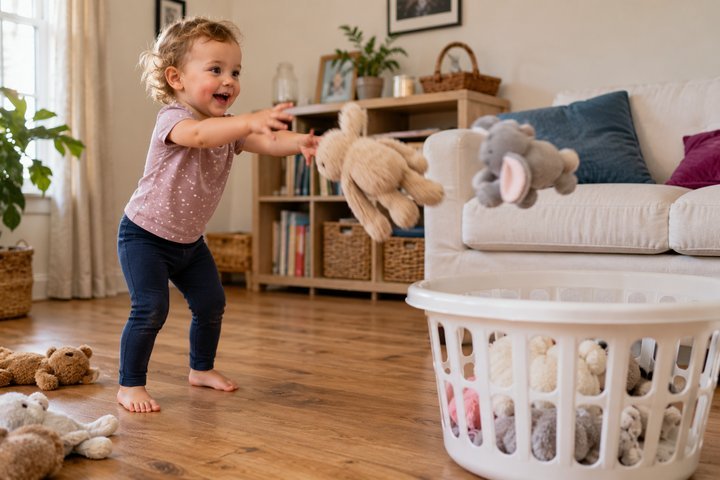
17. Stuffed-animal throw zone
Tags: Busy solo · 5 min · No prep · Rainy day · Burn energy
You’ll need: Soft stuffed animals and a laundry basket
What to do: Put the basket a few feet away and make one rule: the soft toys can be thrown here. Let your child throw them in, miss completely, collect them, and go again. I’ve seen this rescue the exact part of the day when a 2-year-old has started throwing everything else.
What it’s building: Whole-body coordination and giving big movements a safe target.
18. Hallway bowling
Tags: Busy solo · 5 min · Rainy day · Burn energy
You’ll need: A soft ball and three empty plastic bottles
What to do: Stand the bottles at the end of a clear hallway. Roll the ball toward them. Your child does not have to bowl from the correct line. At 2, chasing the ball and kicking over the bottles counts.
What it’s building: Aim, balance, and judging how much force to use.
19. Animal-stomp laps
Tags: No prep · Rainy day · Burn energy
You’ll need: Nothing
What to do: Pick one animal and move across the room like it. Stomp like an elephant. Crawl like a bear. Hop like a bunny. Do one lap, then let your child choose the next animal.
What it’s building: Big body control and turning pretend play into movement.
20. Freeze dance
Tags: No prep · Rainy day · Burn energy
You’ll need: Music
What to do: Put on one song and dance. Pause the music every so often and freeze. Don’t worry about catching them moving. This is not a competition. The stopping and starting is enough.
What it’s building: Listening, body control, and switching between movement and stillness.
21. Paper snowstorm
Tags: Busy solo · 5 min · Rainy day · Burn energy
You’ll need: Scrap paper
What to do: Crumple several sheets into loose paper balls. Put them in a basket and let your child throw them into the air, across the room, or back into the basket. The cleanup is part of the activity if you’re feeling ambitious.
What it’s building: Throwing, reaching, and using both hands to crumple paper.
22. Towel toy pull
Tags: 5 min · No prep · Rainy day · Burn energy
You’ll need: A bath towel and two or three stuffed animals
What to do: Put the stuffed animals on the towel. Show your child how to hold one end and pull the load across the floor. Add another toy when they want it heavier.
What it’s building: Leg strength, grip, and figuring out how much force moves a heavier load.
23. Water-brush wall
Tags: 5 min · Burn energy
You’ll need: A large clean paintbrush, a small container of water, and an outdoor wall, fence, or patio
What to do: Give your child the wet brush and let them “paint” with water. Big arm strokes work best. Stay close to the water container and keep the amount of water small.
What it’s building: Shoulder strength, big arm movements, and seeing an immediate effect from their actions.
24. Cushion push
Tags: No prep · Rainy day · Burn energy
You’ll need: One large couch cushion and clear floor space
What to do: Put the cushion flat on the floor and let your child push it from one side of the room to the other. Add a stuffed animal on top if they want a delivery. Keep the route away from stairs and furniture with sharp corners.
What it’s building: Whole-body strength and pushing against resistance.
25. Shake-the-sheet
Tags: 5 min · Rainy day · Burn energy
You’ll need: A bedsheet and a few soft toys
What to do: Put the toys in the middle of the sheet. You take one side and your child takes the other. Shake until the toys bounce off. Put them back and do it again. This one gets loud fast, which is partly why it works.
What it’s building: Arm strength, timing, and coordinating movement with another person.
If you only try one: Make a stuffed-animal throw zone. Two-year-olds want to throw things. Giving that urge one safe place to go works better than spending the afternoon saying, “Not that.”
What do you do when the activity falls apart anyway?
Sometimes it falls apart.
Your child refuses the activity. They want the blue cup you didn’t put out. The playdough tears in the wrong place and suddenly life is unacceptable.
Don’t keep selling the activity after they’re done with it. A few minutes at age 2 is a perfectly useful run.
Put it away. Try something physical if your child needs to move. Go outside. Let them help with whatever you’re doing instead.
I’ve watched activities flop at setup and work brilliantly three days later with the exact same kid. Two-year-olds bring their own agenda. Your idea is only an invitation.
What do you actually need for 2-year-old activities?
Very little:
- A couple of bowls, cups, and containers
- Painter’s tape
- Washable crayons and paint
- Scrap paper or cardboard
- Playdough
- A tray for containing mess
- A few safe pretend-play things from around the house
- A laundry basket
- Old cloths, brushes, and other real tools they can safely copy you with
Keep art materials washable. Keep small choking hazards, button batteries, accessible magnets, sharp tools, and long cords out of the setup.
Then stop adding things.
If your activity cupboard is so full that setting up play feels like work, the cupboard has defeated the purpose.
Frequently asked questions
How long should activities last for a 2 year old?
Five to 15 minutes is a good run for an activity with a 2-year-old. Plenty end before five minutes. If your child leaves, changes the game, or starts doing something completely different with the materials, you don’t need to drag them back to the original plan.
Why does my 2 year old get so frustrated during activities?
Two-year-olds want control and independence before they have the words, patience, or hand skills to make everything work the way they pictured it. Pick open-ended activities with no wrong result. Give small choices and leave room for your child to change the game.
What activities calm a 2 year old down?
Playdough, water play, simple sensory setups, and repetitive jobs work well after a child has had a physical outlet. For some 2-year-olds, calm play lands better after throwing soft toys, pushing something heavy, dancing, or running around first. Trying to force “quiet time” onto a body that needs to move is a hard sell.
Do 2 year olds need structured activities?
No. Free play, pretend play, outdoor movement, books, and helping with normal household jobs give a 2-year-old plenty to do. Planned activities are useful because days with a 2-year-old are long. They don’t need to become a schedule.
Give them somewhere to be in charge
At 2, a little control changes the whole activity.
For ideas across the toddler years, see toddler activities: 45 ideas by age. If your child is still closer to 1, go to activities for 1 year olds. For what comes next at 3, see activities for 3 year olds.
You can also join the email list for the printable play pack.