
Activities for 3 Year Olds: What Actually Works

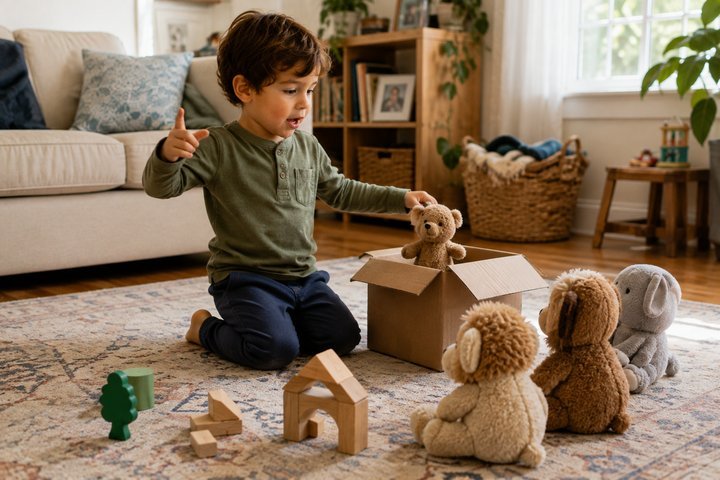
The stuff that worked at 2 suddenly feels too easy. Dumping things into a bowl gets a bored look. But search for “educational activities” and you’re buried in worksheets your kid has zero interest in doing.
Three is different.
Your child can stay with something longer now. They invent whole stories. They understand a simple game. They want to know why everything works. They make things on purpose.
So here are 25 activities for 3 year olds that use that leap, with stuff you already own. No screens. No worksheets.
What changes between 2 and 3?
At 2, a lot of play is about doing: pour it, carry it, throw it, do it myself.
At 3, the idea behind the play gets bigger.
A cardboard box isn’t just something to climb into anymore. It’s a fire truck going to rescue a cat. A drawing has a story. A tower is a castle. A game has a rule, right up until your 3-year-old decides the rule is inconvenient and replaces it.
They also stick around longer. Ten or fifteen minutes with one good setup is realistic now.
That’s why the activities below look different from our activities for 2 year olds. They lean hard into pretend, simple games, figuring things out, and making something real.
What’s a 3-year-old actually into right now?
Three-year-olds tell stories about everything. They ask why before you’ve finished answering the last why.
They want proper jobs. They want games. They build things with a plan in their head and draw pictures that are definitely a dog, even when you would never have guessed dog.
Play with other kids changes too. The story starts getting shared. One kid is the doctor. Someone else is apparently a sick dinosaur.
That’s the useful part of age 3. Give them a world to invent, a question to investigate, or something they can finish and proudly show you.
If anything about your child’s development ever worries you, your pediatrician is the person to ask, not a blog.
Pretend and storytelling activities for 3 year olds
Pretend gets properly interesting at 3. They stop only copying real life and start making up what happens next.
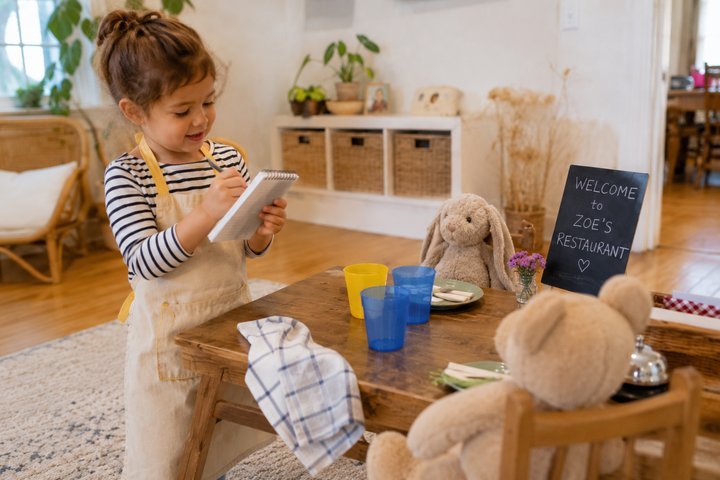
1. Open a restaurant
Tags: Busy solo · Rainy day
You’ll need: Plastic cups, plates, a dish towel, scrap paper, a crayon, and a few stuffed animals
What to do: Put the stuffed animals at the table and tell your child the restaurant is open. They take the orders, make the pretend food, serve everybody, and decide what happens next.
Don’t write the menu for them. Three-year-old restaurants serve soup, birthday cake, and one invisible banana on the same plate.
What it’s building: Storytelling, pretend play, and using language to keep an idea going.
2. Stuffed-animal vet clinic
Tags: Busy solo · Rainy day
You’ll need: Stuffed animals, washcloths, a spoon, an empty clean container, and a small towel
What to do: Pick one animal and announce that it has a sore paw. Let your child examine it and decide what treatment it needs.
The spoon can become a thermometer. The washcloth can become a bandage. Once the first patient is cured, the waiting room tends to fill quickly.
What it’s building: Storytelling, empathy, and turning ordinary objects into pretend props.
3. Cardboard-box bus
Tags: Busy solo · No prep · Rainy day
You’ll need: A large cardboard box or a row of chairs, plus a small bag
What to do: Call it a bus and ask where it’s going. That’s enough to start.
Your child chooses the destination, packs what the passengers need, drives, stops, and handles whatever emergency develops on the way.
What it’s building: Longer pretend sequences and planning what happens next in a story.
4. Toy delivery service
Tags: Busy solo · No prep · Burn energy
You’ll need: A reusable bag or basket and a few toys
What to do: Choose three spots around the room as “houses.” Your child loads the bag and delivers one toy to each house.
After that, let them take over the route. At 3, the delivery driver frequently becomes a firefighter halfway through. Do not file a complaint.
What it’s building: Pretend storytelling, memory, and moving with a purpose.
5. Camping in the living room
Tags: Busy solo · Rainy day
You’ll need: A blanket, pillows, a flashlight, and a backpack
What to do: Make a simple camp spot on the floor. Ask your child what needs to go in the backpack.
Then follow their story. You might cook pretend dinner, look for bears, sleep for eleven seconds, and wake up because apparently it is morning.
What it’s building: Imagination, planning, and carrying one pretend story across several actions.
6. Story basket
Tags: Busy solo · No prep · Rainy day
You’ll need: A basket with three or four safe objects, such as a toy animal, wooden spoon, cup, and sock
What to do: Take out one object and start a story with a single sentence: “The bear found a spoon.”
Hand the story to your child. Each new object has to become part of whatever happens next.
What it’s building: Language, flexible thinking, and making connections between unrelated ideas.
7. Dress-up with a mission
Tags: Busy solo · No prep · Rainy day
You’ll need: A hat, oversized shirt, safe bag, and a few household props
What to do: Skip “let’s dress up” and give the dress-up a reason. The mail carrier has packages to deliver. The explorer needs to find a lost stuffed animal. The chef has a restaurant to open.
A plot holds a 3-year-old longer than a pile of clothes does.
What it’s building: Storytelling, planning, and using pretend play to solve a simple problem.
If you only try one: Open the restaurant. It takes five minutes to set up, gives your child a whole story to run, and grows with whatever they invent next.
Games with simple rules
Three is when an actual game starts being worth the effort. Keep the rule short. If explaining takes longer than playing, you’ve invented the wrong game.
8. Copy captain
Tags: 5 min · No prep · Rainy day · Burn energy
You’ll need: Nothing
What to do: One person is the captain and everybody copies one movement: stomp, clap, spin, crawl, or touch your toes. After two or three moves, swap captains.
Let your 3-year-old be in charge early. That’s the part they came for.
What it’s building: Listening, copying a rule, and taking turns leading.
9. Find my hiding place
Tags: 5 min · No prep · Rainy day
You’ll need: One stuffed animal
What to do: Hide the animal somewhere easy while your child closes their eyes. Give one simple clue, such as “Look near something blue.”
Then swap jobs and let your child hide it for you.
What it’s building: Listening to clues, describing locations, and turn-taking.
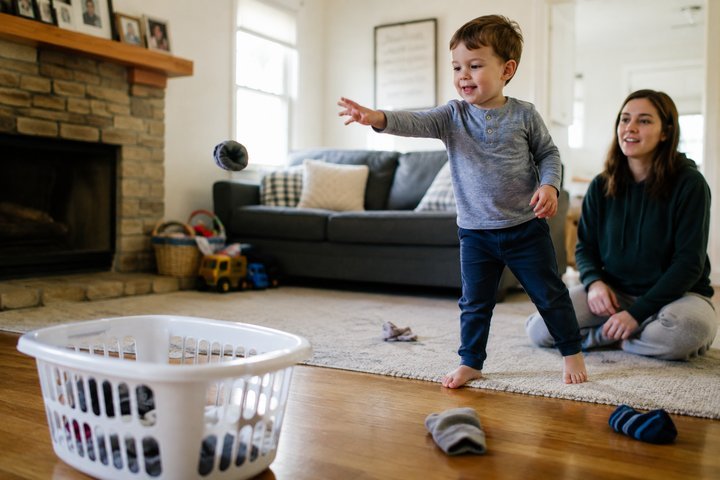
10. Rolled-sock target game
Tags: Busy solo · 5 min · Rainy day · Burn energy
You’ll need: Three pairs of rolled socks and a laundry basket
What to do: Put the basket a few feet away and make the rule simple: get the socks inside.
Your child can move the throwing line closer or farther away. The game still works when they decide the basket should suddenly be a monster.
What it’s building: Aim, judging distance, and following one simple game rule.
11. What’s missing?
Tags: 5 min · No prep · Rainy day
You’ll need: Three familiar objects
What to do: Put the objects on the floor and look at them together. Ask your child to close their eyes, remove one, then ask what’s missing.
Start with three. Five objects turns this from a game into an interrogation.
What it’s building: Memory, attention, and noticing changes.
12. Color mission
Tags: Busy solo · 5 min · No prep · Burn energy
You’ll need: Nothing
What to do: Give your child one mission: “Find me something red.” They bring it back, then you name another color.
Keep it moving through the house instead of sitting down with color cards. This is a hunt, not a quiz.
What it’s building: Matching a simple clue to the real world and remembering a rule while moving.
13. Copy my pattern
Tags: 5 min · No prep · Rainy day
You’ll need: Your hands and a table or floor
What to do: Make a tiny sound pattern such as clap-clap-tap. Your child copies it.
Then let them make one for you. Expect their version to become much longer than yours.
What it’s building: Listening, memory, rhythm, and taking turns.
If you only try one: Play “What’s missing?” It takes no setup, feels like a real game, and three objects are enough to make a 3-year-old take the job very seriously.
Curiosity and “how things work” activities
Welcome to the why years. You do not need to know every answer. Give them something they can actually test.
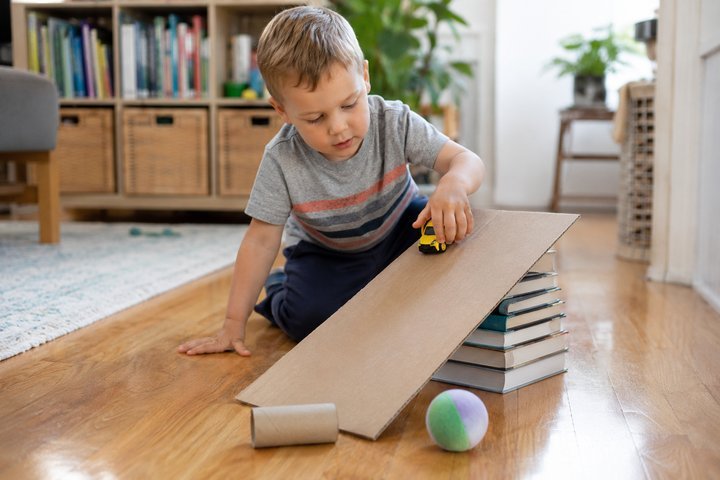
14. What rolls down the ramp?
Tags: Busy solo · Rainy day
You’ll need: A piece of cardboard, a low stack of books, and several large safe objects
What to do: Prop the cardboard into a gentle ramp. Put out things such as a toy car, plastic cup, soft ball, and chunky block.
Ask, “What do you think will roll?” Test them and leave the ramp out. This one has bought me more ten-minute stretches than plenty of activities with far more setup.
What it’s building: Predicting, testing an idea, and noticing how shape changes what happens.
15. Sink or float
Tags: 5 min
You’ll need: A bowl of water and several large household objects that can get wet
What to do: Pick one object and ask whether it will stay on top or go to the bottom. Drop it in and check.
Keep the objects large and stay with your child the whole time because this is water play.
What it’s building: Making a prediction and checking it against what actually happens.
16. Baking soda fizz
Tags: 5 min · Rainy day
You’ll need: Baking soda, vinegar, a tray, a cup, and a spoon
What to do: Put a spoonful of baking soda in the cup on the tray. Let your child pour in a small amount of vinegar and watch what happens.
Do it again if they ask. They will ask.
What it’s building: Cause and effect and learning that combining two things can make something completely new happen.
17. Flashlight shadow test
Tags: Busy solo · Rainy day
You’ll need: A flashlight and a few large toys
What to do: Dim the room and shine the flashlight at one toy near a wall. Move the toy closer to the light and watch the shadow change.
Then hand over the flashlight and let your child test their own ideas.
What it’s building: Curiosity about light, size, and what changes when you move something.
18. Build a paper bridge
Tags: 5 min · Rainy day
You’ll need: Two plastic cups, a sheet of paper or thin cardboard, and a few chunky blocks
What to do: Put the cups a short distance apart and lay the paper across them like a bridge. Add blocks one at a time until the bridge bends or falls.
Then ask your child how to make it stronger and try again.
What it’s building: Early problem-solving and testing different ways to build something.
19. Mix a new color
Tags: 5 min · Rainy day
You’ll need: Washable paint in two colors, a tray, paper, and a brush
What to do: Put two small blobs of paint on the tray. Ask what your child thinks will happen when they meet.
Let your child mix them, then use the new color on the paper. Resist turning this into a lecture about primary colors. The surprise is enough.
What it’s building: Prediction, observation, and learning through a visible change.
If you only try one: Build the ramp. It starts with one simple question, “Will this roll?”, and a 3-year-old can keep testing new answers long after you’ve stopped directing it.
Activities where they make something real
Three-year-olds start caring about the thing at the end. They want to tell you what they made and where it belongs.
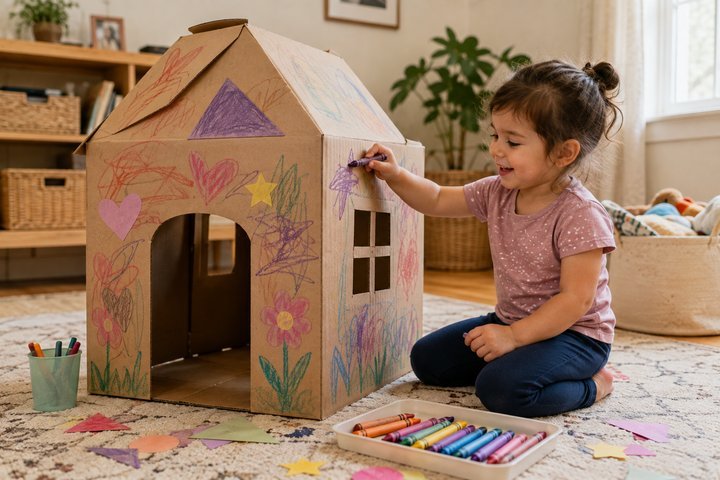
20. Make a cardboard house
Tags: Busy solo · Rainy day
You’ll need: A cardboard box, washable crayons, and tape
What to do: Cut a door and a couple of windows before handing over the box. Let your child decide whether it is a house, shop, animal home, or something else entirely.
They decorate it and keep it for play afterward.
What it’s building: Planning, drawing with a purpose, and turning an idea into a real object.
21. Torn-paper picture
Tags: Busy solo · Rainy day
You’ll need: Colored scrap paper, plain paper, and a glue stick
What to do: Let your child tear the colored paper into pieces. They choose where each piece goes and glue it down to make a picture.
Ask what they made after they’re finished. Don’t announce that it looks like a tree unless you enjoy being corrected.
What it’s building: Hand strength, planning a picture, and making choices about where pieces belong.
22. Make your own snack
Tags: 5 min · No prep
You’ll need: A soft spread, bread or cracker, a child-safe spreading utensil, and familiar toppings
What to do: Give your child one piece of bread or a large cracker and let them spread the topping themselves. Add a few familiar foods they can place on top.
Then they eat the thing they just made, which gives this activity an unusually convincing ending.
What it’s building: Hand control and following a short sequence to make something useful.
23. Build a blanket den
Tags: Rainy day
You’ll need: A blanket, couch cushions, and sturdy furniture
What to do: Help your child choose where the den should go. Drape the blanket securely and let them decide what belongs inside.
The building matters as much as sitting in it afterward. Keep the setup low and stable, with no heavy objects that can fall.
What it’s building: Planning space, solving building problems, and creating something big enough to use.
24. Make a paper crown
Tags: Busy solo · 5 min · Rainy day
You’ll need: A wide strip of paper, washable crayons, and tape
What to do: Let your child decorate the strip with whatever marks or pictures they want. Wrap it loosely around their head to measure, remove it, then tape the ends together.
Now the crown needs a story. Three-year-olds rarely wear one without immediately becoming somebody important.
What it’s building: Drawing with a purpose and seeing flat materials become something wearable.
25. Paint a sign
Tags: Busy solo · Rainy day
You’ll need: Cardboard, washable paint or crayons, and tape
What to do: Ask your child what needs a sign. Their bedroom door? The cardboard house? The pretend restaurant?
Let them make the marks themselves, even if the “letters” aren’t letters yet. Hang the finished sign where they chose.
What it’s building: Understanding that marks can carry meaning and making something for a real purpose.
If you only try one: Make the cardboard house. The making part holds their attention, then the finished thing feeds straight back into pretend play for the rest of the day.
What do you actually need for 3-year-old activities?
You don’t need an activity box arriving at your door every month.
A useful stash at 3 is:
- Washable crayons and paint
- Plain paper and scrap cardboard
- Painter’s tape
- A glue stick
- A few cardboard boxes
- Plastic cups and bowls
- A flashlight
- A soft ball or rolled socks
- A few stuffed animals
- Old bags, hats, towels, and kitchen tools for pretend play
- Baking soda and vinegar for simple experiments
Keep materials age-appropriate and check household objects for sharp edges, loose parts, button batteries, accessible magnets, and choking hazards.
Then stop adding things.
At 3, the story around four objects does more work than a bin containing forty.
If you’re also setting up play for a younger sibling, sensory activities for 1 year olds has sensory ideas aimed at the younger end.
Frequently asked questions
How long should activities last for a 3 year old?
Ten to 20 minutes is a good run for an activity with a 3-year-old. A strong pretend setup or building project can keep going much longer.
The bigger change from age 2 is that they can hold onto an idea now. They come back to the restaurant, fort, or drawing instead of abandoning it after two minutes.
What activities are good for a 3 year old’s development?
Pretend play, simple games with rules, hands-on experiments, building, drawing, and making real things all fit a 3-year-old well.
These give them practice with language, problem-solving, memory, coordination, and playing with other people without turning the afternoon into school.
Do 3 year olds need educational activities or worksheets?
No. Three-year-olds learn through play, conversation, movement, pretending, building, and doing real things with you.
Worksheets aren’t required. If you want to explore colors, counting, shapes, or how things work, put those ideas into a game or a real activity instead of drilling them on paper.
What can I do with a bored 3 year old?
Give a bored 3-year-old a story, a simple rule, or a question to investigate.
Open a pretend restaurant. Hide a stuffed animal and give clues. Build a ramp and test what rolls. If none of that lands, hand them a real job and let them take it seriously.
At 3, give the play somewhere to go
Pretend, games, questions, and making things are where activities finally start to hold.
For the full toddler activity guide, see toddler activities: 45 ideas by age. If your child is still closer to 2, start with activities for 2 year olds.
You can also join the email list for the printable play pack.