
Toddler activities: 45 ideas by age, plus what to do when you just need ten minutes

You’re out of ideas, your toddler is bored, and it’s somehow only 9 a.m. Some days you want a screen-free activity you can do together. Other days you need ten minutes to make dinner, answer an email, or drink your coffee while it’s still warm. These toddler activities are sorted by age and by the kind of help you need right now. Most use things already sitting around your home, not a cart full of supplies.
How should you use this page?
Jump to your child’s age, or scan the tags for an activity that fits the moment.
Busy solo: Your toddler can do it semi-independently in a child-safe space while you stay nearby but don’t sit on the floor.
5 min: Almost no setup.
No prep: Nothing to buy or make first.
Rainy day: Indoor and fairly easy to contain.
Burn energy: Gets your toddler moving.
Most activities carry more than one tag, and plenty work across different ages. Follow your child’s lead. If a sorting activity becomes a dumping activity, dumping is the activity.
“Busy solo” does not mean unattended around water, food, small objects, stairs, or kitchen hazards. Keep play away from the stove, hot liquids, knives, cords, and anything your toddler can pull down.
Activities for 1 year olds
One-year-olds don’t need complicated setups. A few containers, painter’s tape, sturdy books, and safe kitchen utensils will cover most of this list. Anything else can usually be found in the laundry basket, recycling pile, or couch cushions.
Short on time? Start with the fill-and-dump bowl. It’s the one mine kept coming back to, although “coming back” mostly meant tipping it over again.
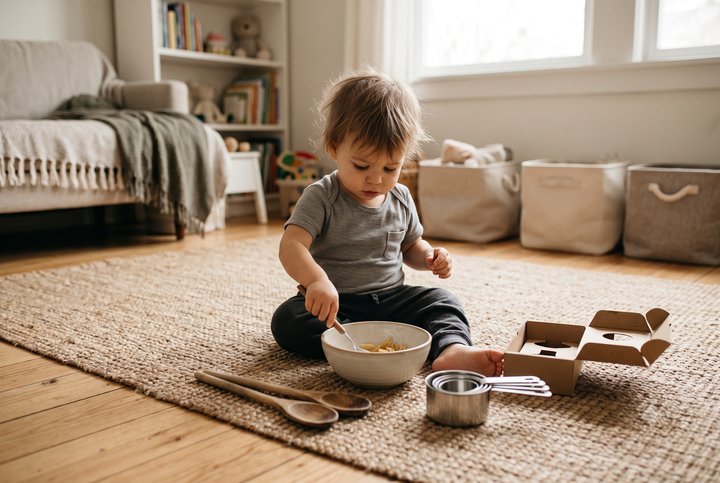
Fill and dump a bowl
Tags: Busy solo, 5 min, No prep, Rainy day
You’ll need: A large bowl and safe objects such as wooden spoons, washcloths, or measuring cups.
What to do: Put a few objects in the bowl and show your toddler how to take them out and put them back. Let them tip the whole thing over.
What it’s building: Grasping, releasing, and understanding that their actions make things happen.
A real note from Anita: Mine ignored the sorting part and repeatedly dumped everything on the floor. That version lasted longer, so that’s the version we kept.
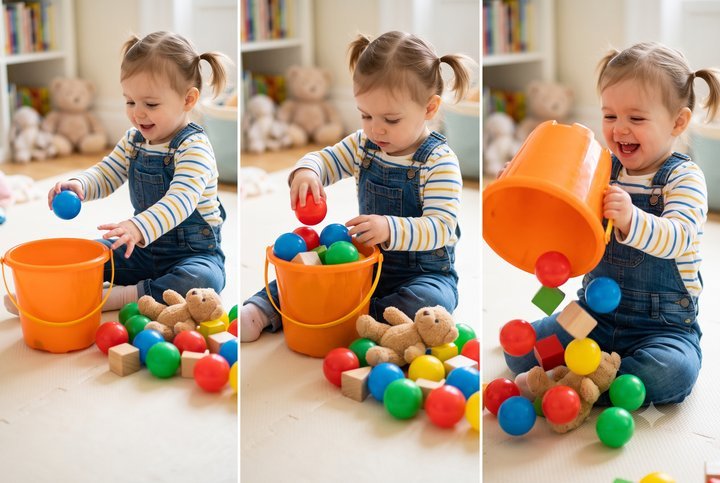
Pull fabric from a box
Tags: Busy solo, 5 min, Rainy day
You’ll need: A tissue box or cardboard box and a few washcloths or lightweight scarves.
What to do: Tuck the fabric loosely inside with one corner showing. Let your toddler pull everything out, then refill it together.
What it’s building: Grip strength, coordination, and curiosity about partly hidden objects.
Make a small book basket
Tags: Busy solo, No prep, Rainy day
You’ll need: Three or four board books and a basket.
What to do: Put the books within easy reach and let your toddler choose, turn pages, point, close them, and start again. Read when invited, but don’t worry about finishing.
What it’s building: Language, attention, and page-turning control.
A real note from Anita: We often read one page from four different books. It isn’t a literary experience, but it is reading together.
Stack and knock down cups
Tags: Busy solo, 5 min, Rainy day
You’ll need: Plastic cups or small food containers.
What to do: Stack two or three cups and let your toddler knock them over. They can also nest the cups, bang them together, or hide a toy underneath one.
What it’s building: Hand-eye coordination and early ideas about size and balance.
Roll a sock ball
Tags: 5 min, No prep, Burn energy
You’ll need: A rolled-up pair of socks.
What to do: Sit facing your toddler and roll the socks toward them. Let them push, carry, throw, or roll the bundle back.
What it’s building: Tracking, coordination, and early turn-taking.
Explore a safe utensil basket
Tags: Busy solo, 5 min, No prep, Rainy day
You’ll need: A basket with wooden spoons, silicone spatulas, measuring cups, and a small metal bowl.
What to do: Place the basket in a child-safe play area or offer it while your toddler is secured in a high chair. Let them scoop, tap, stack, and investigate.
What it’s building: Sensory exploration and learning how different objects move and sound.
Move large fridge magnets
Tags: Busy solo, 5 min, Rainy day
You’ll need: Large, one-piece, toddler-safe magnets.
What to do: Place a few magnets low on the refrigerator or on a magnetic baking sheet. Let your toddler pull them off and put them back.
What it’s building: Finger strength and controlled pulling and placing.
Safety: Do not use small magnets or magnets with parts that can detach. Swallowed magnets can cause severe internal injuries or death.
Peel sticky notes from the wall
Tags: Busy solo, 5 min, Rainy day
You’ll need: Several sticky notes.
What to do: Place the notes on a wall or cabinet at toddler height, leaving the corners slightly raised. Let your toddler peel them off and stick them elsewhere.
What it’s building: Pinching, pulling, and controlled finger movements.
Climb into a cardboard box
Tags: Busy solo, No prep, Rainy day, Burn energy
You’ll need: A sturdy cardboard box with tape and staples removed.
What to do: Leave the box open on the floor and let your toddler climb in, sit, crawl out, or fill it with toys. Cut one low doorway if the cardboard is sturdy enough.
What it’s building: Balance, body awareness, and pretend play.
Crawl over cushions
Tags: 5 min, No prep, Rainy day, Burn energy
You’ll need: Two or three firm couch cushions.
What to do: Place the cushions on the floor in a short path. Stay close while your toddler crawls over, around, or between them.
What it’s building: Balance, strength, and confidence moving across uneven surfaces.
Empty the laundry basket
Tags: Busy solo, No prep, Rainy day
You’ll need: A basket of clean socks, washcloths, or small towels.
What to do: Put the basket on the floor and let your toddler pull everything out. You can name the items or ask them to hand one back.
What it’s building: Reaching, grasping, and simple language.
Rescue a taped toy
Tags: 5 min, Rainy day
You’ll need: Painter’s tape and two or three large toys.
What to do: Lightly tape the toys to a tray or high-chair table. Show your toddler how to pull the tape away and free them.
What it’s building: Finger strength and basic problem-solving.
Pour water between cups
Tags: 5 min, Rainy day
You’ll need: Two plastic cups, a towel, and a shallow tray or bathtub.
What to do: Add a small amount of water and show your toddler how to pour it from one cup to another. Accept immediately that most of it will miss.
What it’s building: Coordination and an early understanding of full and empty.
A real note from Anita: Put the towel down before you start. It’s much easier than trying to persuade a one-year-old to respect the tray’s boundaries.
Safety: Water play needs close, constant adult supervision, even when the water is shallow.
Wash bath toys in the sink
Tags: Rainy day
You’ll need: A few bath toys, a washcloth, and an empty or barely filled sink.
What to do: Stand beside your toddler and help them wipe or rinse the toys. Use a secure learning tower only as directed and keep your hands close.
What it’s building: Two-handed coordination and copying everyday routines.
Safety: Stay within arm’s reach throughout the activity and empty the sink immediately afterward.
Follow the flashlight
Tags: 5 min, No prep, Rainy day, Burn energy
You’ll need: A flashlight.
What to do: Dim the room slightly and move the light slowly across the floor or wall. Let your toddler crawl or walk after it without shining it into anyone’s eyes.
What it’s building: Visual tracking and whole-body movement.
Find more stage-specific ideas in activities for 1 year olds and sensory activities for 1 year olds.
What are toddlers actually doing when they play?
Sensory play is touching, pouring, squeezing, and listening. It helps toddlers explore how things feel and behave.
Fine motor play uses the small muscles in the hands and fingers. Pinching a sticky note uses the same kind of grip they’ll later need for crayons and pencils.
Gross motor play is crawling, climbing, jumping, pushing, and balancing. It gives big muscles practice and toddler energy somewhere to go.
Pretend play lets toddlers copy everyday life, try out language, and make sense of routines.
Children develop through how they play, learn, communicate, and move, although the exact timing looks different for every child.
Activities for 2 year olds
Two-year-olds are ready for more sorting, matching, posting, peeling, and simple pretend play. Painter’s tape, stickers, playdough, a few containers, and large craft materials are useful at this age, but you still don’t need a dedicated activity closet.
Short on time? Start with the cardboard posting box. Mine used it longer than several toys that arrived with batteries and unreasonable promises.
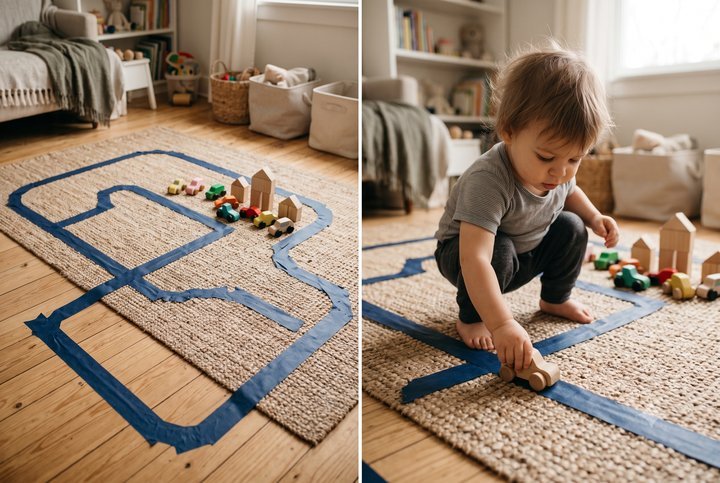
Make a painter’s-tape road
Tags: Busy solo, 5 min, Rainy day
You’ll need: Painter’s tape and toy cars, blocks, or animal figures.
What to do: Make two or three simple roads on the floor. Your toddler can drive along them, build stops, or ignore the roads and park everything in one pile.
What it’s building: Coordination, direction, and pretend play.
Paint with a damp sponge
Tags: Busy solo, 5 min, Rainy day
You’ll need: A damp sponge or paintbrush and dark cardboard.
What to do: Let your toddler make wet marks on the cardboard. When the marks dry, the page resets itself.
What it’s building: Early mark-making and wrist control without a full paint cleanup.
Make a sticker trail
Tags: Busy solo, 5 min, Rainy day
You’ll need: Large stickers and paper.
What to do: Draw a thick line, circle, or road on the paper. Ask your toddler to place stickers along it, or let them cover one determined corner.
What it’s building: Finger control and noticing where objects sit in space.
Transfer pom-poms
Tags: Busy solo, 5 min, Rainy day
You’ll need: Two bowls, a spoon or kitchen tongs, and large pom-poms.
What to do: Show your toddler how to move the pom-poms between bowls. Let them switch to their hands when the tool becomes annoying.
What it’s building: Hand control and the grip later used for drawing and writing.
A real note from Anita: This usually ends with pom-poms on the floor. I stop when they reach a different room, which feels like a fair household policy.
Safety: Skip pom-poms if your child still mouths objects, regardless of age.
Push pipe cleaners through a colander
Tags: Busy solo, 5 min, Rainy day
You’ll need: A colander and full-length pipe cleaners.
What to do: Turn the colander upside down and show your toddler how to push the pipe cleaners through the holes. Bend the sharp ends inward first.
What it’s building: Aim, finger control, and patience with a small challenge.
Safety: Skip this if your child chews craft materials or cannot use them safely.
Sort the laundry
Tags: Busy solo, No prep, Rainy day
You’ll need: Clean socks, washcloths, and two baskets.
What to do: Ask your toddler to put socks in one basket and washcloths in another. Start with only two groups.
What it’s building: Matching, noticing differences, and following a simple direction.
Explore a safe junk drawer
Tags: 5 min, No prep, Rainy day
You’ll need: A shallow box with safe objects such as a whisk, coaster, large paintbrush, tape roll, and silicone cup.
What to do: Curate the box first, then let your toddler examine, sort, and test the objects. Sit nearby and name whatever catches their attention.
What it’s building: Curiosity, language, and comparing shapes, weights, and textures.
Safety: No batteries, coins, sharp tools, medicines, cords, glass, small magnets, or mouth-sized pieces.
Post cards through a box
Tags: Busy solo, Rainy day
You’ll need: A cardboard box and old greeting cards or pieces of sturdy cardboard.
What to do: Cut a wide slot in the box and cover rough edges with tape. Let your toddler push the cards through, open the box, and start again.
What it’s building: Hand-eye coordination and working out how objects fit through spaces.
A real note from Anita: The posting lasted about eight minutes. Opening the box and throwing every card behind the couch lasted another twelve.
Drive through paper snow
Tags: Rainy day
You’ll need: A tray, loosely crumpled pieces of white tissue paper or plain paper, and two toy cars.
What to do: Fill the tray with large, loose pieces of paper and let the cars push through the “snow.” Your toddler can make roads, pile up drifts, or bury the cars and rescue them.
What it’s building: Sensory exploration, pretend play, and understanding how objects move through resistance.
Safety: Use pieces too large to swallow and skip this if your child still mouths paper or play materials.
Try push-broom curling
Tags: No prep, Rainy day, Burn energy
You’ll need: A child-sized broom or clean push broom and a rolled pair of socks.
What to do: Put the sock ball on a clear floor and let your toddler push it toward a box or taped line. Move breakable objects first.
What it’s building: Whole-body coordination and judging how hard to push.
Wash toy animals
Tags: Rainy day
You’ll need: Plastic animals, a washcloth, and a shallow basin or sink.
What to do: Add a tiny amount of water and let your toddler scrub and rinse the animals while you stay beside them. Dry them together afterward.
What it’s building: Sequencing, pretend play, and two-handed coordination.
Safety: This is not a Busy solo activity. Water requires close, constant supervision.
Throw paper balls at a tape web
Tags: 5 min, Rainy day, Burn energy
You’ll need: Painter’s tape and crumpled paper.
What to do: Stretch tape across an open doorway with the sticky side facing your toddler. Let them throw soft paper balls and see which ones stick.
What it’s building: Aim, throwing control, and noticing cause and effect.
Rotate one chunky puzzle
Tags: Busy solo, No prep, Rainy day
You’ll need: One chunky puzzle.
What to do: Put out one puzzle instead of a stack. Remove a few pieces, place them beside the board, and let your toddler work through the small set.
What it’s building: Matching, turning objects to fit, and staying with a problem.
Go on a color hunt
Tags: No prep, Rainy day, Burn energy
You’ll need: Nothing.
What to do: Name one color and ask your toddler to find something that matches. Walk together at first, then let them bring objects to a central spot.
What it’s building: Color recognition, language, and listening.
Build a cotton-ball snow stand
Tags: Busy solo, 5 min, Rainy day
You’ll need: Cotton balls, a muffin pan, and a spoon.
What to do: Let your toddler scoop, pile, and move the cotton “snow” between the muffin cups. Add a toy animal for a small pretend winter scene.
What it’s building: Scooping control, imagination, and sorting.
Safety: Skip cotton balls if your child still puts play materials in their mouth.
Find more sorting, art, and problem-solving ideas in activities for 2 year olds.
Activities for 3 year olds
Three-year-olds can usually manage longer pretend games, simple counting, and directions with two parts. Playdough, painter’s tape, crayons, cardboard, and a few open-ended toys go a long way here.
Short on time? Start with the pretend store. It changes every time, requires almost nothing, and can occupy a three-year-old while you do something nearby.
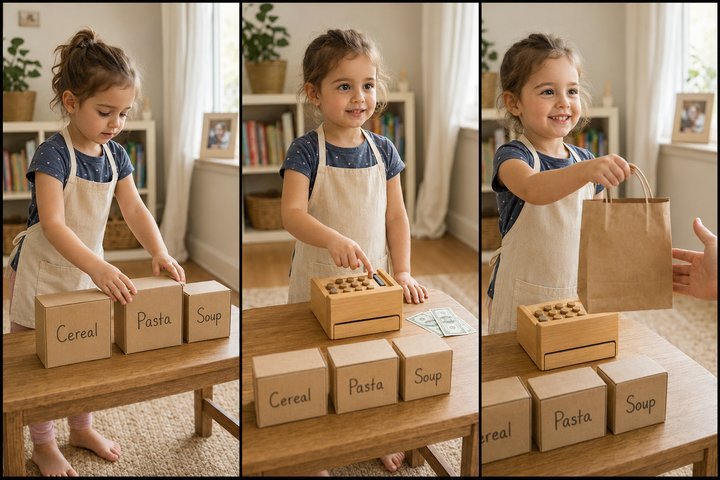
Open a pretend store
Tags: Busy solo, No prep, Rainy day
You’ll need: Empty food boxes, a reusable bag, paper, and crayons.
What to do: Arrange the boxes on a low table and take turns shopping and checking out. Once the game is going, step back and let your toddler run the place.
What it’s building: Language, imagination, turn-taking, and everyday sequencing.
A real note from Anita: Everything in our store cost “a hundred,” including one sock. I didn’t challenge the pricing structure.
Use kitchen tools with playdough
Tags: Busy solo, Rainy day
You’ll need: Playdough and safe tools such as a rolling pin, spoon, cookie cutter, or potato masher.
What to do: Let your toddler roll, cut, flatten, and stamp the dough. They can make pretend food or simply test what each tool does.
What it’s building: Hand strength, coordination, and open-ended pretend play.
Go on a treasure hunt
Tags: 5 min, No prep, Rainy day, Burn energy
You’ll need: Nothing.
What to do: Ask your toddler to find one soft thing, one red thing, and something used in the kitchen. Give one clue at a time or try a two-step direction.
What it’s building: Listening, memory, and descriptive language.
Jump to the shape
Tags: 5 min, Rainy day, Burn energy
You’ll need: Painter’s tape or paper shapes.
What to do: Make a circle, square, and triangle on the floor. Call out a shape and let your toddler jump, crawl, or tiptoe to it.
What it’s building: Shape recognition, balance, and following directions.
Thread large pasta
Tags: Rainy day
You’ll need: Large tube pasta and a thick shoelace.
What to do: Wrap tape around one lace end and show your toddler how to push it through the pasta. Begin with three or four pieces, not a necklace worthy of a museum.
What it’s building: Concentration and careful finger movements.
Safety: Dry pasta is a choking risk. Supervise closely and skip it if your child still mouths objects.
Drop coins into a piggy bank
Tags: 5 min, Rainy day
You’ll need: A piggy bank or slotted container and several large coins.
What to do: Sit beside your toddler as they post the coins one at a time. Count them together, then put every coin away immediately.
What it’s building: Finger control, counting, and understanding how objects fit.
Safety: Coins are choking hazards. This activity requires direct supervision and is not suitable for any child who mouths objects.
Run a cardboard delivery service
Tags: Busy solo, No prep, Rainy day, Burn energy
You’ll need: A cardboard box or reusable bag and a few toys.
What to do: Ask your toddler to deliver toys to different rooms or stuffed animals. Once they understand the game, let them invent the customers and route.
What it’s building: Pretend play, memory, and purposeful movement.
Follow a tape maze
Tags: Busy solo, 5 min, Rainy day, Burn energy
You’ll need: Painter’s tape.
What to do: Make a winding path across the floor. Your toddler can walk the line, drive a car along it, or carry an object from one end to the other.
What it’s building: Balance, planning, and control of big movements.
Sort clean recycling
Tags: Busy solo, No prep, Rainy day
You’ll need: Clean cardboard boxes, plastic containers, and paper bags.
What to do: Ask your toddler to sort cardboard from plastic or large items from small ones. They can then stack, flatten, or load everything into a box.
What it’s building: Classification, comparing, and helping with a real household task.
Make a story basket
Tags: Busy solo, No prep, Rainy day
You’ll need: Three or four toy animals, figures, or household objects in a basket.
What to do: Begin a simple story using the objects, then leave the basket for your toddler to continue. Ask what happened afterward instead of directing the plot.
What it’s building: Language, sequencing, and imagination.
Count snacks into cups
Tags: 5 min, No prep
You’ll need: An age-appropriate snack and two or three cups.
What to do: Ask your toddler to place two pieces in one cup and three in another. Keep the numbers small and let them eat the results while seated.
What it’s building: Early counting and matching one number to one object.
Safety: Eating requires active adult supervision. Prepare foods in shapes and textures appropriate for your child.
Wash the window
Tags: 5 min, Rainy day
You’ll need: A barely damp cloth and a low window or glass door.
What to do: Show your toddler how to wipe in circles or clean handprints from one small section. Use plain water, not household cleaning spray.
What it’s building: Shoulder control, coordination, and participation in everyday work.
Build a cardboard bridge
Tags: Busy solo, No prep, Rainy day
You’ll need: Small boxes, cardboard tubes, and toy cars or animals.
What to do: Ask whether your toddler can build a bridge that holds one toy. Let them test, rebuild, and change the goal.
What it’s building: Early planning, balance, and problem-solving.
Bowl with plastic bottles
Tags: 5 min, No prep, Rainy day, Burn energy
You’ll need: Empty plastic bottles and a soft ball or sock ball.
What to do: Stand the bottles in a row and roll the ball toward them. Let your toddler reset the pins, invent a throwing line, or abandon scoring entirely.
What it’s building: Aim, force control, and coordination.
Guess what’s in the bag
Tags: 5 min, No prep, Rainy day
You’ll need: An opaque bag and familiar safe objects such as a spoon, block, sock, and toy car.
What to do: Put one object inside and let your toddler feel it without looking. Ask them to guess, then switch roles.
What it’s building: Descriptive language, memory, and noticing shape and texture.
A real note from Anita: Mine looked inside immediately. We tried again with a dramatic “no peeking” rule, which worked for nearly one full turn.
Find more pretend play, counting, and simple challenges in activities for 3 year olds.
What can I give my toddler while I’m making dinner?
When you need to cook, choose an activity your toddler already understands. Dinner time is not the ideal moment to unveil a seven-step craft involving glue and emotional resilience.
Set the activity in a childproofed area away from the stove, hot pans, sharp tools, appliance cords, and cleaning products. For younger toddlers, a secured high chair, playpen, or gated play space may be safer than having them move freely through the kitchen.
Good Busy solo options include:
Safe utensil basket: Useful for a one-year-old secured nearby with safe kitchen objects.
Book basket: Put out only a few sturdy favorites.
Large fridge magnets: Use only large, intact, toddler-safe magnets.
Cardboard posting box: Easy to repeat without your help.
Sticker trail: Peel the sticker edges first if needed.
Chunky puzzle rotation: One puzzle is usually less overwhelming than five.
Pretend store: Start the game, then let your toddler take over.
Cardboard delivery service: Works when they need to move rather than sit.
Playdough and kitchen tools: Best for a child who no longer tastes the dough or tools.
Clean recycling sort: Gives a three-year-old a real job with safe materials.
None of these guarantees twenty peaceful minutes. Toddlers have not signed that agreement. They do give you a better chance than handing over an unfamiliar activity and hoping instinct handles the rest.
What are the best indoor toddler activities for a rainy day?
Start with activities that use one contained area and don’t require you to reorganize the home afterward.
Fill and dump a bowl: Good for younger toddlers who want repetition.
Pull fabric from a box: Quick to reset when everything comes out.
Painter’s-tape road: Works with cars, blocks, or toy animals.
Cardboard posting box: A useful quiet option.
Tape-web throwing: Better when your toddler needs movement.
Pretend store: Can grow into a longer pretend game.
Jump to the shape: Gets energy out without much space.
Indoor bowling: Uses recycling and a soft ball.
Mystery bag: Calm, fast, and genuinely no prep.
You only need one. This isn’t a rainy-day curriculum.
Why does keeping it simple work better?
You don’t need a cabinet full of activity supplies. You also don’t need to turn an ordinary Tuesday into a styled childhood memory.
The best activity is the one you can set up while your toddler is already asking you to play. A cardboard box can be a car, store, bed, tunnel, delivery truck, or simply a box they climb into. That usually earns its space better than a kit with fourteen pieces and instructions you’ll lose by Friday.
Some activities last fifteen minutes. Some last two. A short activity didn’t fail. Your toddler tried it, found out what happened, and moved on.
Which toddler toys are actually worth owning?
Most of these toddler activities need no special toys. Still, a few open-ended items can earn their keep across all three ages.
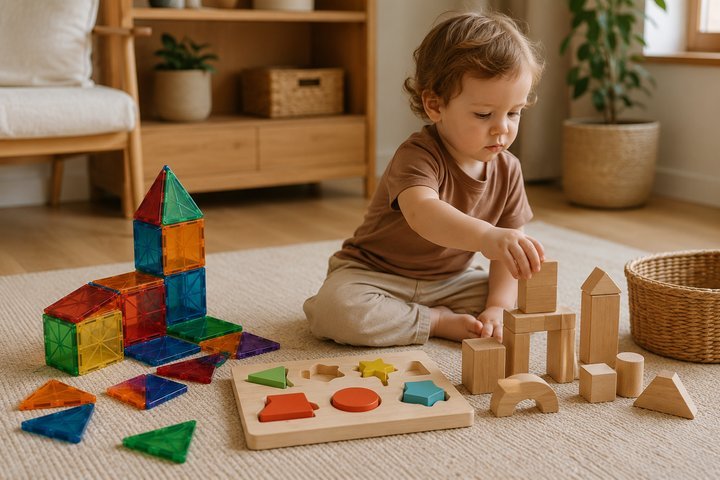
Magnetic tiles can become towers, roads, houses, color-sorting pieces, and pretend food. Choose an age-appropriate set, inspect it regularly, and discard damaged tiles immediately because exposed magnets are dangerous if swallowed.
Chunky wooden puzzles work for matching, naming, problem-solving, and independent play. Simple pictures and easy-grip pieces are usually more useful than a complicated board.
Large pom-poms can be transferred, sorted, counted, and used in pretend play once your child has stopped mouthing objects.
If you’re going to buy anything, these are the kinds of items that earn their keep. A fuller gift guide and toys for an 18 month old will be linked here when it’s live.
Frequently asked questions
How do I keep a toddler busy without buying toys?
Use safe household objects for filling, dumping, sorting, stacking, posting, pretending, and moving. Cardboard boxes, plastic cups, laundry, wooden spoons, couch cushions, books, and clean recycling can support plenty of easy toddler activities without buying new toys.
How do I keep my toddler busy while I cook or work?
Choose a familiar activity your toddler can repeat without constant instructions, such as a posting box, book basket, chunky puzzle, sticker page, pretend store, or cardboard building set. Set it up in a childproofed space away from cooking hazards, and remain close enough to supervise.
How long should a toddler activity actually last?
A few minutes is normal, especially for a one-year-old. Five to fifteen minutes is a good run for most toddler activities, although a familiar favorite may last longer and a new idea may be rejected immediately.
What activities suit a 1-year-old versus a 2-year-old or 3-year-old?
A 1-year-old usually enjoys simple filling, dumping, pulling, rolling, and climbing. A 2-year-old can handle basic sorting, matching, posting, stickers, and simple problem-solving. A 3-year-old is often ready for pretend games, early counting, building challenges, and directions with two steps.
What can I do with a toddler on a rainy day?
Try a contained indoor activity such as a cardboard posting box, painter’s-tape road, playdough, a book basket, indoor bowling, or a pretend store. Add a movement activity such as a cushion path or shape-jumping game when your toddler needs to burn energy.
What are good screen-free activities for toddlers?
Good screen-free toddler activities include water painting, sorting laundry, building with cardboard, rolling a ball, looking at board books, pretend shopping, playdough, puzzles, treasure hunts, and simple household jobs. The best option matches your child’s age and uses a task they can understand quickly.
Related toddler activity guides
Sensory activities for 1 year olds
Gift guide and toys for an 18 month old
Each age guide goes deeper into that stage and links back to this toddler activities hub.